Maths · Describe straight-sided shapesSides and corners
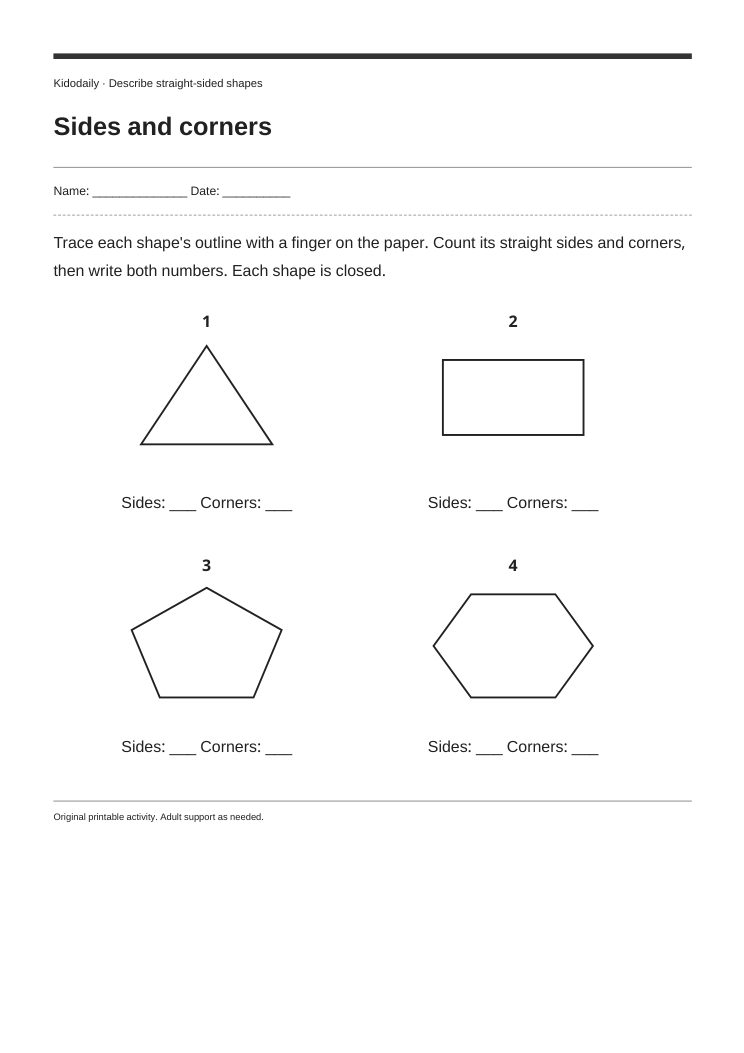
Trace each shape's outline with a finger on the paper. Count its straight sides and corners, then write both numbers. Each shape is closed.
 Download worksheet · PDF
Parent guide and answers
Triangle: 3 sides and 3 corners. Rectangle: 4 and 4. Pentagon: 5 and 5. Hexagon: 6 and 6. Turning a shape does not change these counts.
Two sides, the same value
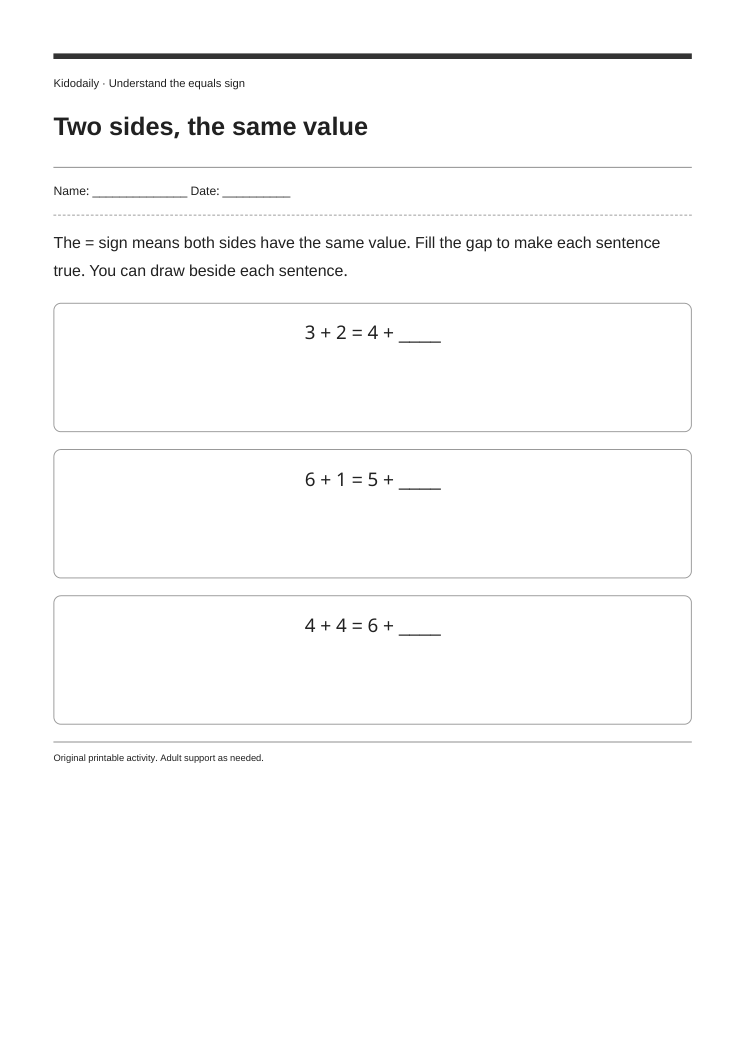
The = sign means both sides have the same value. Fill the gap to make each sentence true. You can draw beside each sentence.
 Download worksheet · PDF
Parent guide and answers
From top: 1, 2, 2. Both sides total 5, then 7, then 8. The equals sign does not mean that an answer must only appear on the right.
Two routes on a grid
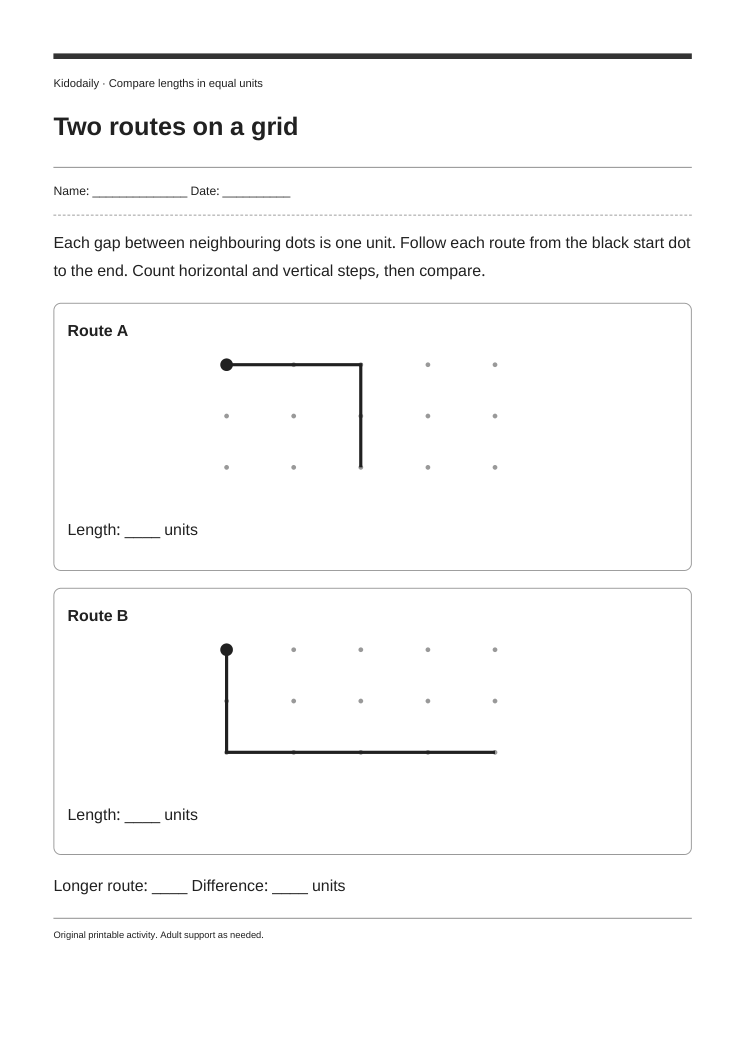
Each gap between neighbouring dots is one unit. Follow each route from the black start dot to the end. Count horizontal and vertical steps, then compare.
 Download worksheet · PDF
Parent guide and answers
Route A: 4 units. Route B: 6 units. B is 2 units longer. Count gaps, not dots. Each segment between neighbouring dots is one unit.
Living things and made objects
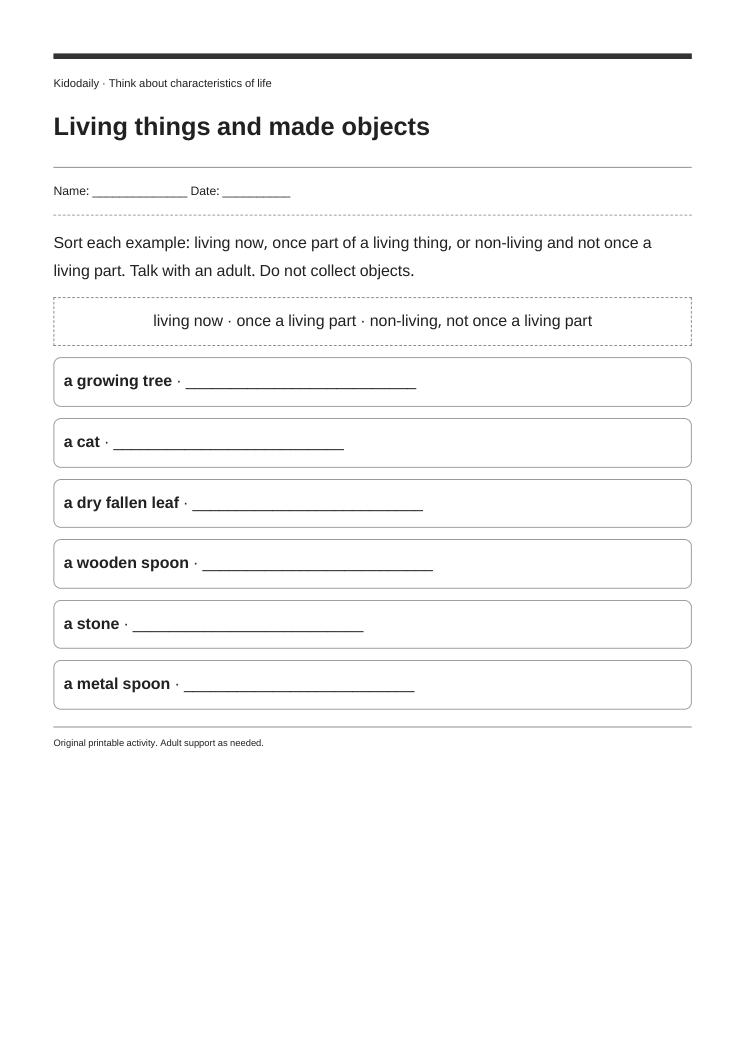
Sort each example: living now, once part of a living thing, or non-living and not once a living part. Talk with an adult. Do not collect objects.
 Download worksheet · PDF
Parent guide and answers
A growing tree and a cat: living now. A dry fallen leaf and a wooden spoon: once part of living things. A stone and a metal spoon: non-living, not once living parts. Movement alone does not define life; a plant is living even though it does not walk.
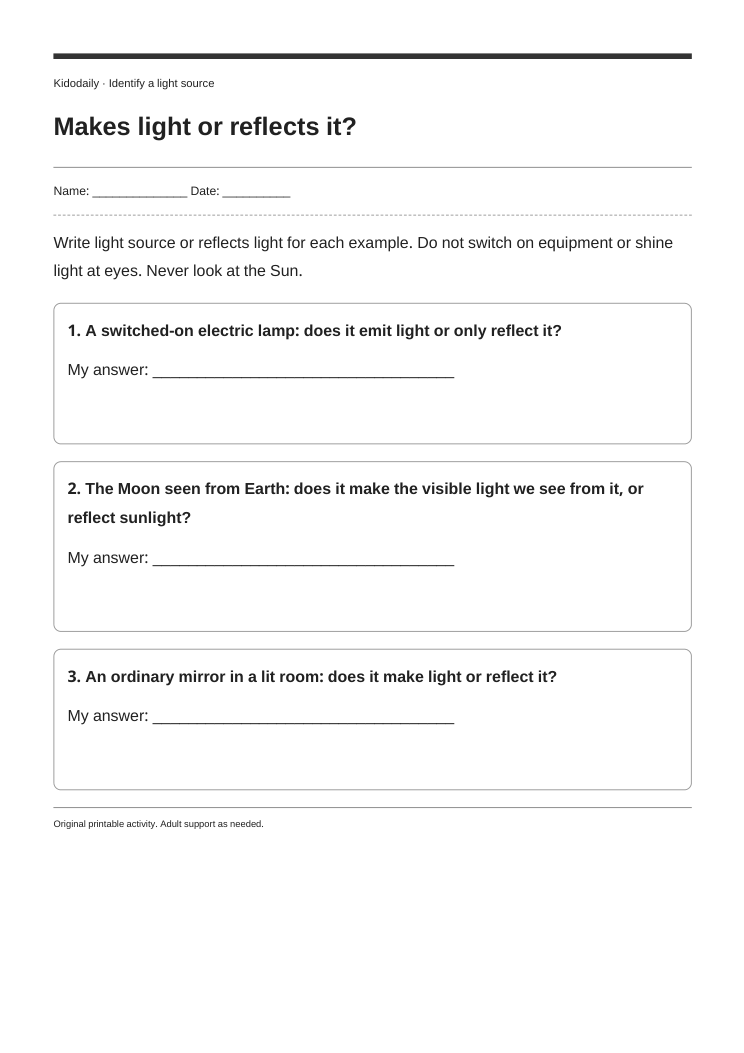
Makes light or reflects it?
Write light source or reflects light for each example. Do not switch on equipment or shine light at eyes. Never look at the Sun.
 Download worksheet · PDF
Parent guide and answers
A lit lamp: light source. The Moon: reflects sunlight. An ordinary mirror: reflects light. A source can also reflect some light; the distinction here is whether it emits its own visible light. No practical test or Sun viewing.
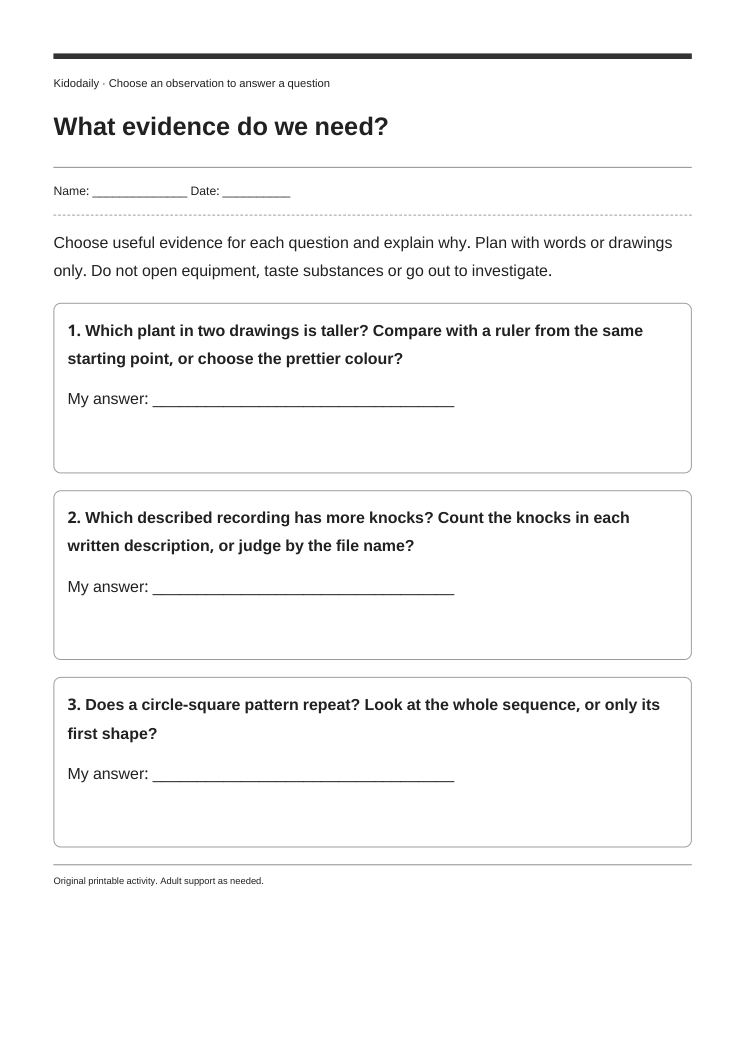
What evidence do we need?
Choose useful evidence for each question and explain why. Plan with words or drawings only. Do not open equipment, taste substances or go out to investigate.
 Download worksheet · PDF
Parent guide and answers
Measure from the same starting point; count knocks in both descriptions; inspect the sequence. Evidence needs to address the question. These are hypothetical situations; no recordings or devices are needed.