Maths · Recognise a halfTwo equal halves
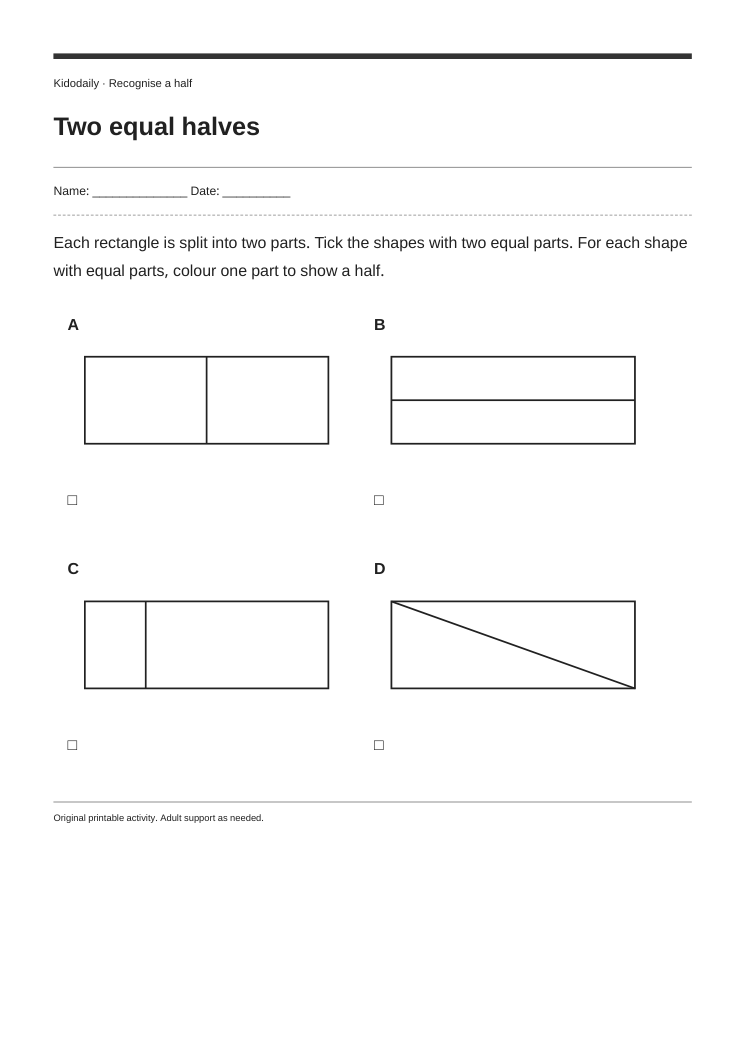
Each rectangle is split into two parts. Tick the shapes with two equal parts. For each shape with equal parts, colour one part to show a half.
 Download worksheet · PDF
Parent guide and answers
A, B and D have two equal halves. C has unequal parts. A half is one of two equal parts of one whole.
Read the group votes
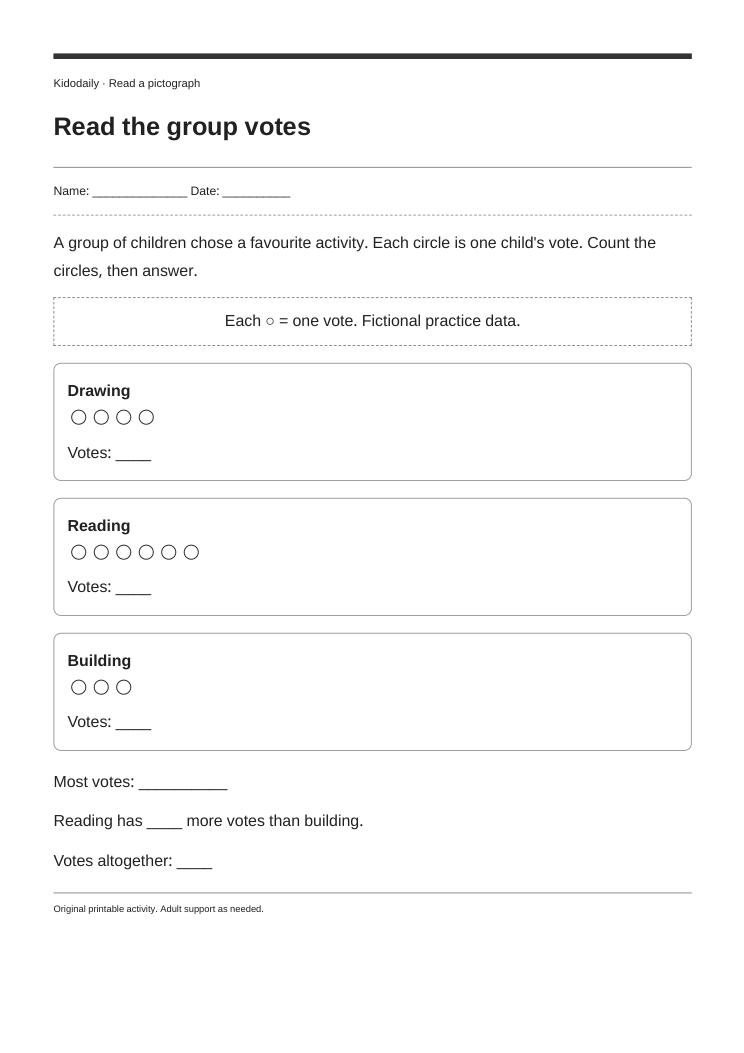
A group of children chose a favourite activity. Each circle is one child's vote. Count the circles, then answer.
 Download worksheet · PDF
Parent guide and answers
Drawing: 4, reading: 6, building: 3. Reading has the most votes. Reading has 3 more votes than building. There are 13 votes altogether. These are fictional practice data.
Pairs and spares
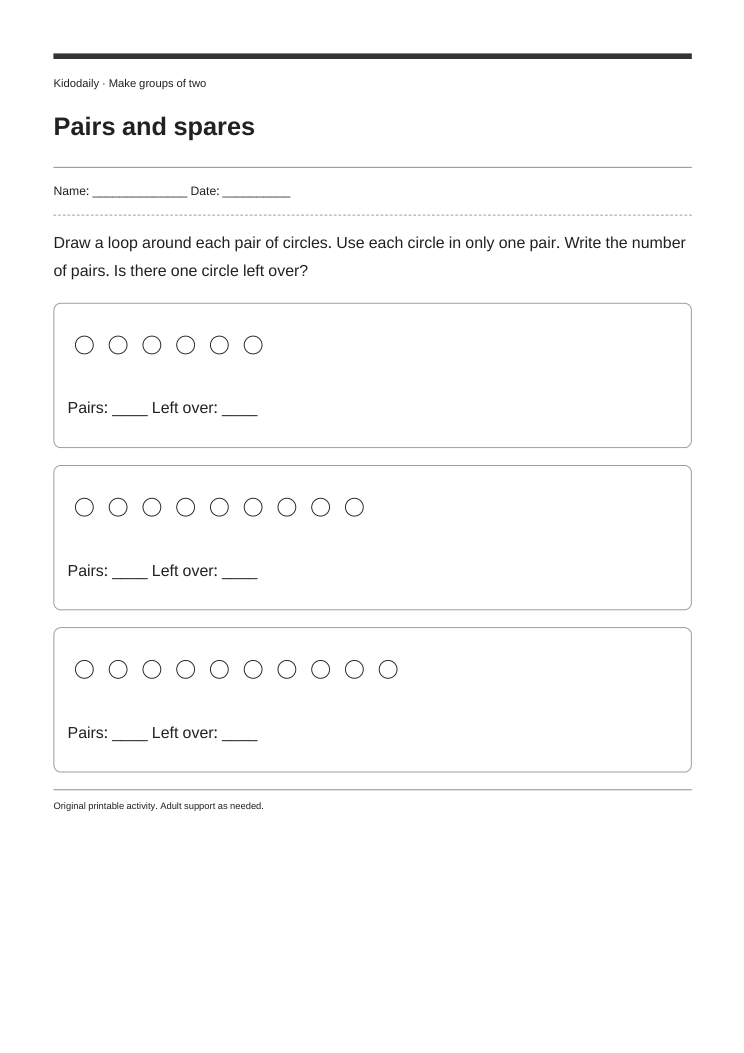
Draw a loop around each pair of circles. Use each circle in only one pair. Write the number of pairs. Is there one circle left over?
 Download worksheet · PDF
Parent guide and answers
6 circles: 3 pairs, none left. 9 circles: 4 pairs, 1 left. 10 circles: 5 pairs, none left. The pairing arrangement may vary.
Push or pull?
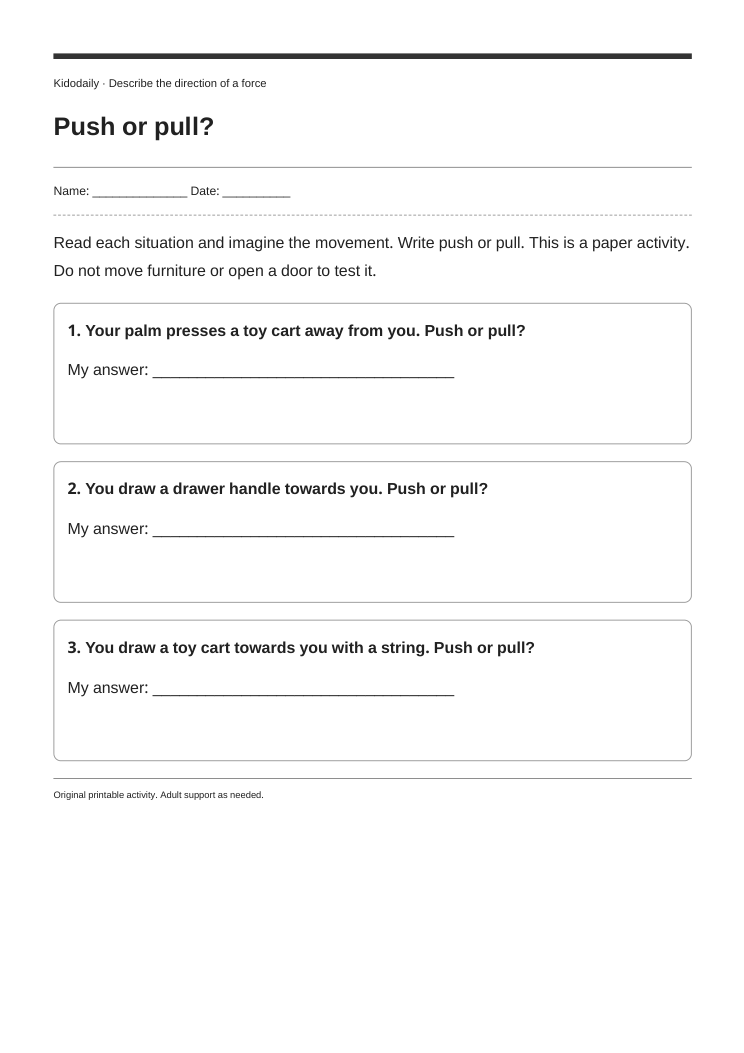
Read each situation and imagine the movement. Write push or pull. This is a paper activity. Do not move furniture or open a door to test it.
 Download worksheet · PDF
Parent guide and answers
In order: push, pull, pull. In these examples, a push acts away from the point of contact and a pull draws something towards the puller. A push or pull can change motion. No practical test is needed.
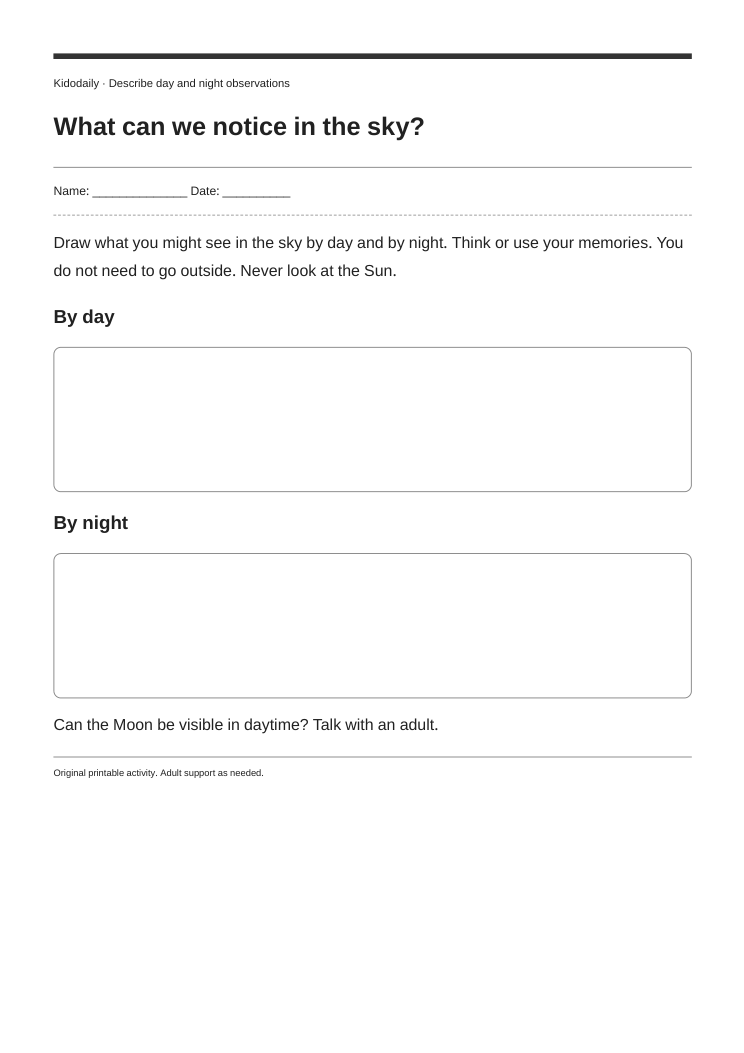
What can we notice in the sky?
Draw what you might see in the sky by day and by night. Think or use your memories. You do not need to go outside. Never look at the Sun.
 Download worksheet · PDF
Parent guide and answers
Open drawings, such as clouds by day or night and stars at night. The Moon can be visible in daytime or at night, and is not visible every night. Do not classify it as night-only. Never look at the Sun or ask a child to do so.
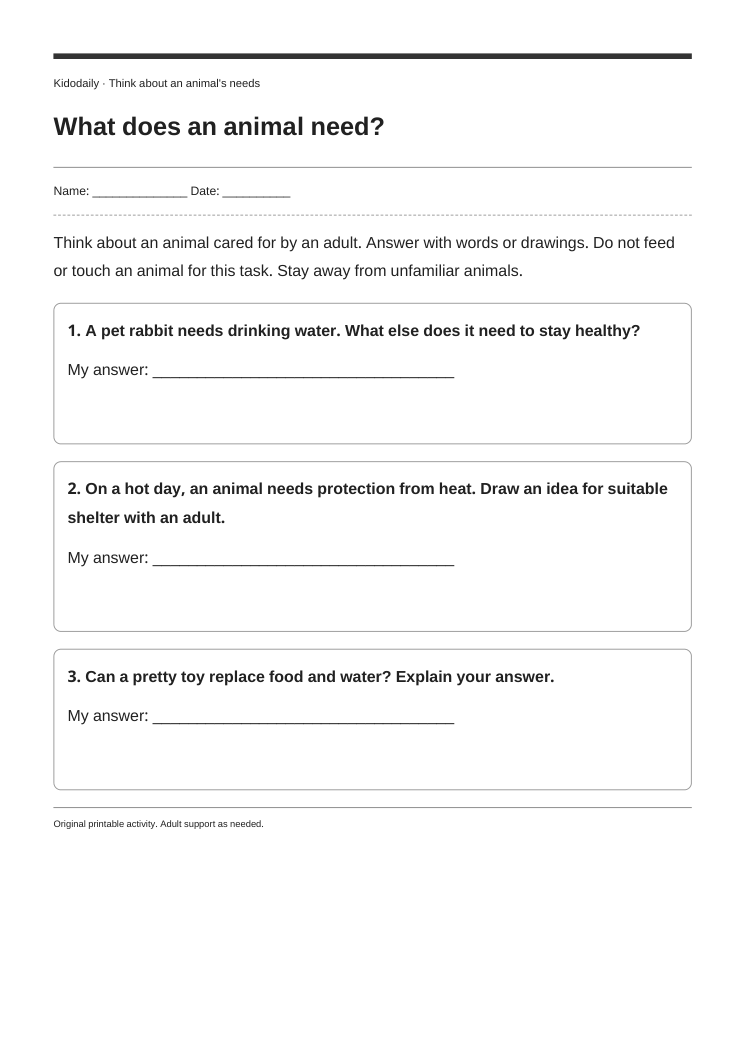
What does an animal need?
Think about an animal cared for by an adult. Answer with words or drawings. Do not feed or touch an animal for this task. Stay away from unfamiliar animals.
 Download worksheet · PDF
Parent guide and answers
Examples include species-appropriate food, air, a safe place and care. Shelter should provide suitable protection with ventilation, water and care. Do not shut an animal in a box. A toy cannot replace food and water. Detailed needs vary; an adult and a vet, when needed, decide care.